DevlogJuly 2026
Building the salt flats: weather, trails and trade
The salt flats are the first region where all three of our core systems meet: the living trade economy, the caravan AI and our weather-driven terrain shaders. It's a deliberately empty space — no towns, no walls — which makes it the perfect stress test. If a region with nothing in it is still interesting to cross, the systems are doing their job.
The big win this milestone was persistent caravan trails. Every trader that crosses the flats deforms the salt crust slightly; busy routes darken into visible roads over in-game weeks. It's built on the same displacement tech as our Dune Shader Kit, so plugin customers will get the improvements for free in the next update.
Still open: the weather pass. Salt storms currently look great and play terribly — visibility drops so hard that players just stop. We're experimenting with storms that reroll ambient prices while they last, so braving one is a calculated trade risk rather than a chore.
unreal engine 5environment arteconomy
ReleaseJuly 2026
Caravan AI 2.0 — smarter routing, half the cost
Caravan AI 2.0 is live on the marketplace. The headline: the flow-field solver was rewritten to run fully async, cutting the per-agent cost roughly in half and making thousand-agent crowds practical on mid-range hardware. Existing licenses upgrade free, as always.
The routing layer also learned economic weighting. Agents no longer just pick the shortest path — they can weigh toll costs, danger ratings and cargo value per edge. It shipped because our own flagship needed it, which is the pattern for every plugin we sell: nothing goes on the store that we don't run in production ourselves.
Full changelog and migration notes are in the marketplace listing. Breaking changes are limited to the custom cost-function API; the default setup migrates untouched.
plugin releaseunreal engineai & crowds
ArtJune 2026
Meet the cast: first character key art
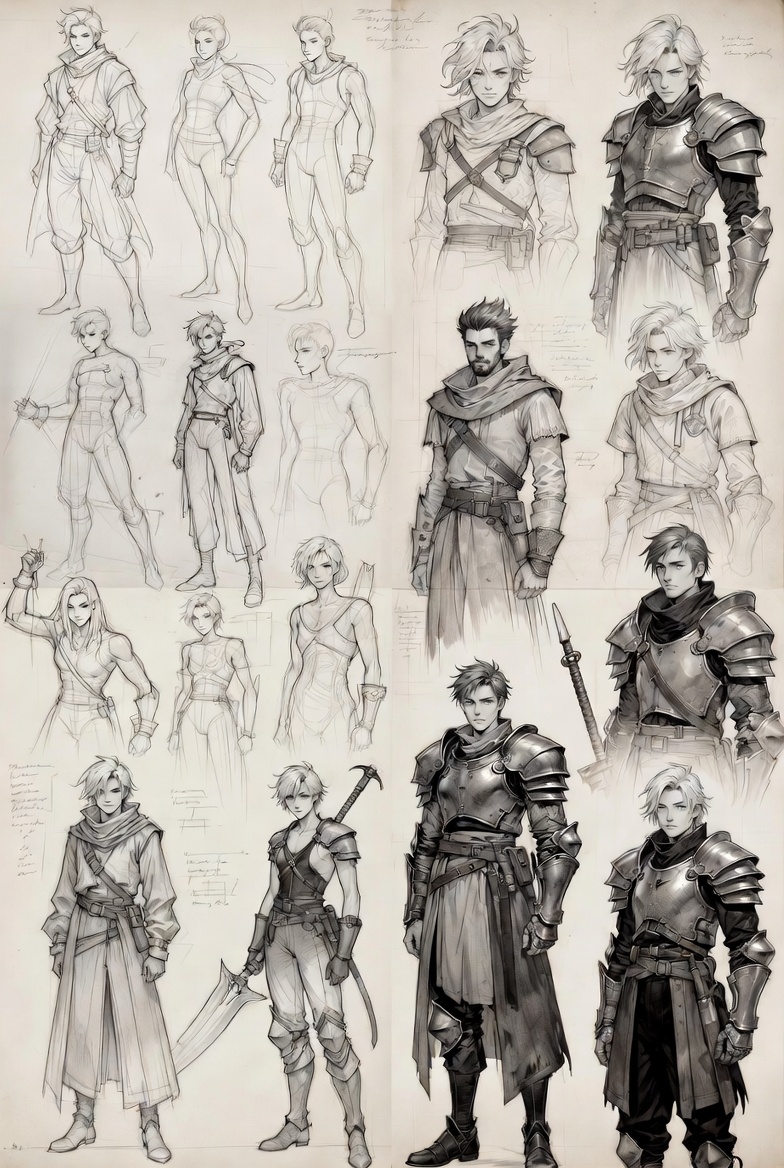
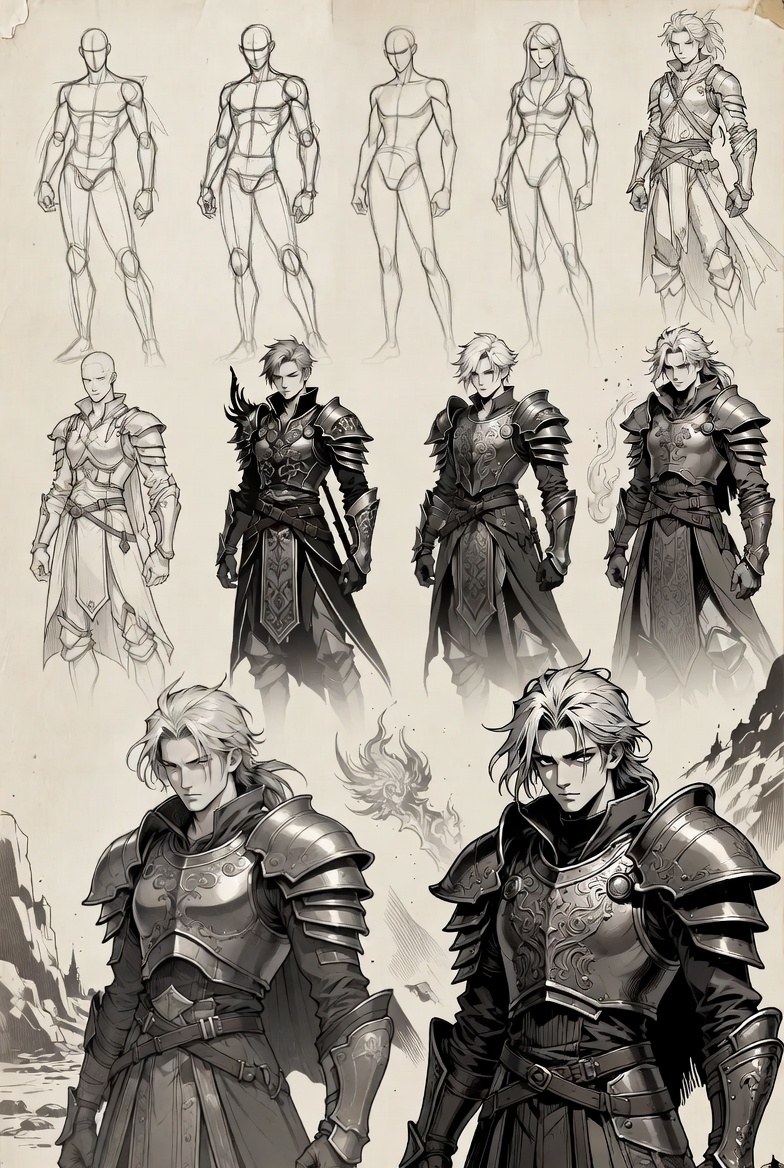
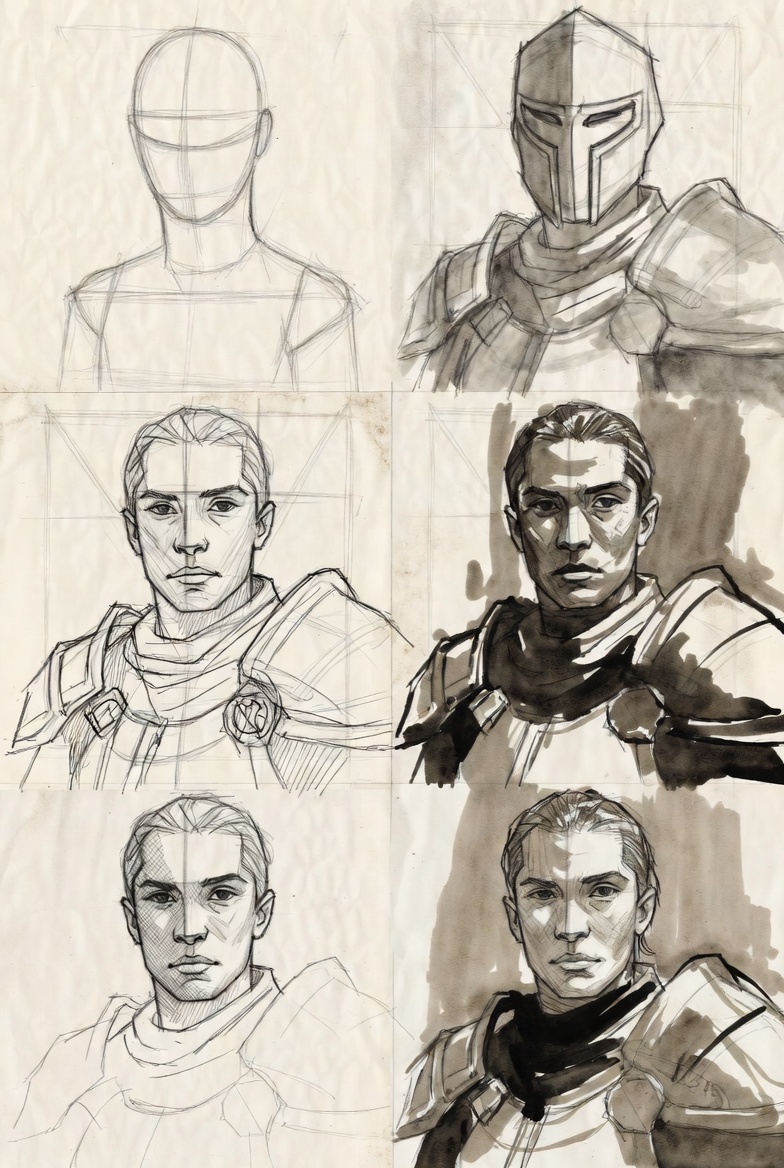
The first four characters of Project Silkroad have final designs: The Trader, The Guide, The Sentinel and The Broker. Every one of them walked the same five-stage pipeline — rough exploration, structural sketch, refined linework, value study, final design — and we've published the full evolution for The Trader as a character dossier.
Designing in monochrome ink first was the best decision we made this year. Value studies expose silhouette problems that color hides, and the ink language gives the whole cast a shared DNA even though they were drawn months apart. Color comes last, as a targeted accent rather than a rescue.
Dossiers for the remaining three are in progress — the interactive cast overview already has their stats and bios if you can't wait.
concept artcharacter designart pipeline
TechMay 2026
Why a two-person indie studio bets on Unreal Engine 5
We get asked why a small indie studio builds on Unreal Engine 5 instead of something lighter. The honest answer: the marketplace pays our rent. Shipping plugins for the engine we use daily means every system we build for the flagship — routing, shaders, trade UI — has a second life as a product. The game funds the tools; the tools fund the game.
Technically, the deciding factors were World Partition for our seamless trade map, Nanite for the hand-painted-then-scanned rock work, and Blueprints as a designer-facing layer over our C++ systems. The costs are real too — editor iteration times and the occasional asset-loading crash at 2 a.m. — but the trade has been worth it every quarter we've measured it.
If you're evaluating engines for an economy-heavy open-world game, our short advice: pick the engine whose marketplace you'd be proud to sell on. You'll end up building tools either way.
unreal engine 5software developmentindie studio
iOSApril 2026
Side quest: a pocket trade ledger for iOS
Between milestones we prototyped something small: an iOS companion app that mirrors your in-game trade ledger — routes run, margins per good, price history per city. It started as an internal balancing tool; staring at the economy on a phone during commutes turned out to be the fastest way to spot broken price loops.
It's built in Swift with a thin sync layer against the same backend our live-build panel uses, so it cost us about three weeks. Whether it ships publicly depends on how the flagship's online features settle — but the experiment convinced us that small iOS apps are a viable third craft for the studio alongside plugins and the game itself.
ios appscompanion appprototyping